
3D printable box generator: boxes with lids
Type the inside size of the box you need (the room your things take), then pick a lid: a lift-off lid with a lip that drops inside the rim, a sliding lid that runs in grooves, or a lid on a print-in-place hinge. Add a grid of dividers, round the corners, set the wall and the floor, and add a label recess on the front or a foot that stacks the boxes.
- Free, no account to download
- STL, 3MF and STEP
- Lid motion checked for clearance
Parameters
Loading the sliders...
Sliders and downloads are free. The AI designer uses credits; new accounts start with free ones.
Every box is built on our CAD engine and its lid is checked moving: lifted off, slid out or swung open, with the smallest gap measured on the way. Download STL or 3MF for your slicer, with the lid laid the way it prints, or STEP to keep editing in Fusion, Onshape or FreeCAD. Free, and no account is needed to download.
Start from an example
Finished designs from the Library to start from: open one, set its sliders, download it or change it with AI.
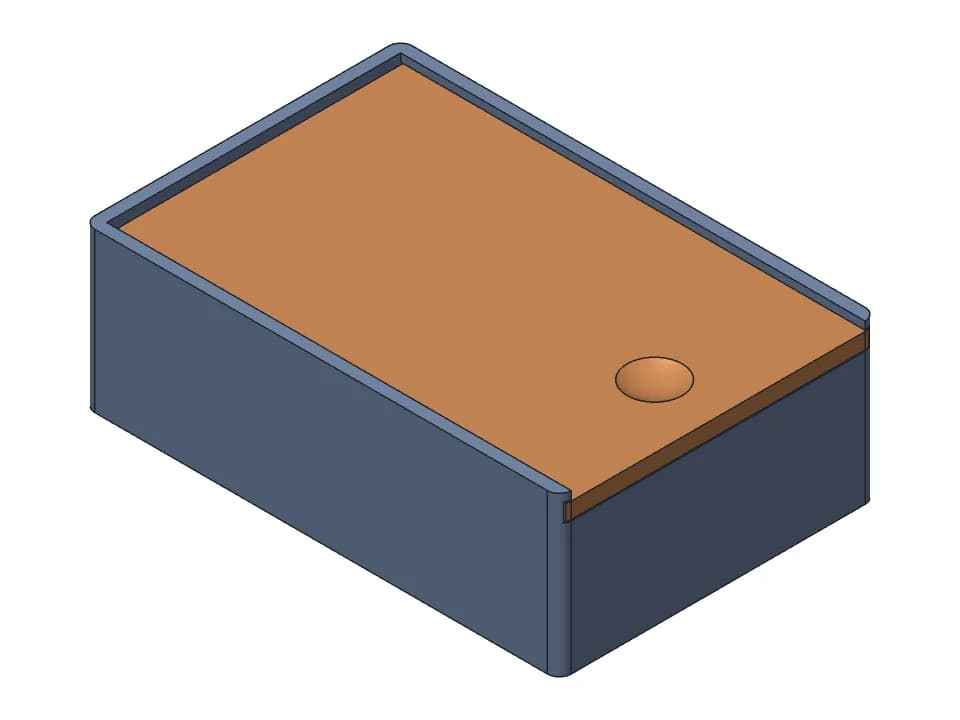
Sliding-lid box
Two-part box whose lid slides in grooves and stops at the closed end, with a thumb dish to push it.
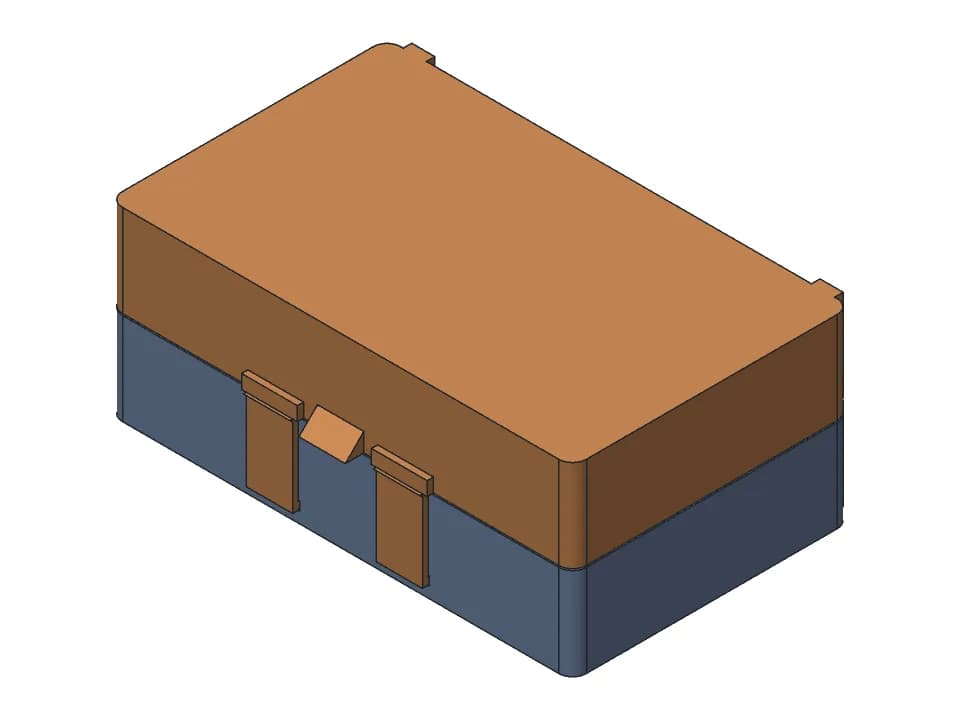
Hinged box
A box that prints in one piece with the lid open: print-in-place hinge, snap latch, any size.
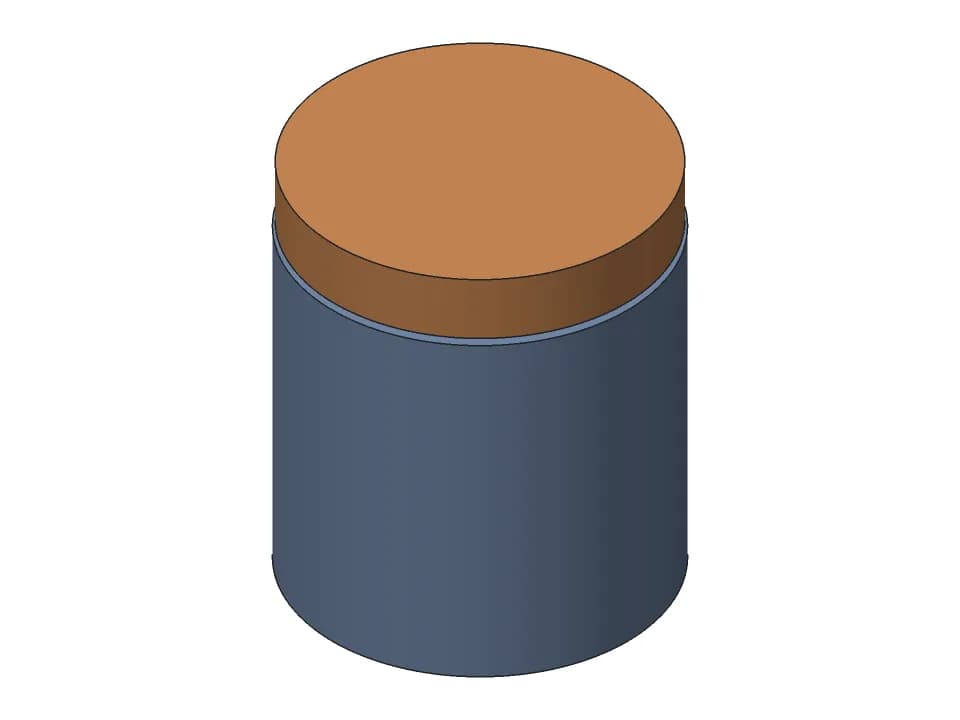
Screw-top jar
Screw-top jar with a 2-turn lid: set the size, thread pitch and wall, print both parts without supports.
Size, wall thickness and lid clearance
Start from the inside: measure what goes in the box and add about 1 mm each way. The generator builds the walls and the floor around that size and gives the outside dimensions under the viewer, so you can check the box fits a drawer or a shelf. For the wall, use a multiple of your nozzle's line width (about 0.4 mm), so the slicer fills it with whole perimeters and no thin gap fill:
| Box | Wall | On a 0.4 mm nozzle | Notes |
|---|---|---|---|
| Small, light boxes (under 60 mm) | 1.2 mm | 3 lines | Jewellery, SD cards, bits |
| Most boxes | 1.6 to 2 mm | 4 to 5 lines | The generator starts at 2 mm |
| Large boxes (over 150 mm) or heavy contents | 2.4 to 3 mm | 6 to 7 lines | Tools, screws, anything dropped |
| Floor | 1.2 to 1.6 mm | 6 to 8 layers of 0.2 mm | Fewer layers show the infill through the bottom |
| Lid plate | 1.6 to 2 mm | 8 to 10 layers | Thinner lids warp on big boxes |
The lid needs a gap your printer can hold. Too small and the lid sticks or will not go on; too big and it rattles or falls off. Clearance here is per side (radial): a 0.2 mm lid clearance makes the lip 0.4 mm smaller than the opening in each direction. The defaults below are a safe start for most printers; the 3D print tolerance test measures your own in about 15 minutes, and once it is saved to your fit profile the sliders start from it.
| Lid | Start with | Range | Notes |
|---|---|---|---|
| Lift-off lid, lip in the rim | 0.2 mm | 0.15 to 0.3 mm | 0.15 holds by friction on a tuned printer; 0.3 drops on |
| Sliding lid in grooves | 0.2 mm | 0.2 to 0.35 mm | Long lids need more: friction builds along the groove |
| Print-in-place hinge | 0.35 mm | 0.2 to 0.6 mm | 0.2 on a tuned Bambu Lab or Prusa, 0.4 on older printers |
| Lid over the rim (hinged box) | 0.4 mm (2 layers) | whole layers only | The surface above a Z gap is a bridge |
Which lid: lift-off, sliding or hinged
Lift-off lid
A flat lid with a lip that drops 3 to 6 mm inside the rim, so it cannot slide off. It fits any size of box and is the quickest to print. A notch in the front rim lets you lift the lid with a fingernail. The lid prints upside down, top on the bed, lip pointing up, and the download lays it that way.
Sliding lid
The lid runs in a groove along each long wall and comes out through the open end; the closed end is its stop. It sits below a rim, flush with the top, and has a shallow dish for your thumb. Grooves need wall to cut into, so this lid uses walls of 1.8 mm or more (the generator says when it thickens them). The lid prints flat next to the box.
Hinged lid
The same print-in-place hinge as our hinge generator: cone knuckles instead of a pin, printed closed in one piece with the lid two layers above the rim. It opens to about 120 degrees, where blocks on the lid's knuckles meet the back wall. There is no latch: for a lid that clicks shut, start from the Library's hinged box with a snap latch or add a snap fit.
Dividers, labels and stacking
- Dividers: up to 8 across the length and 6 across the width, 1.2 mm thick, spaced evenly. Compartments stay at least 8 mm wide. Under a lift-off lid they stop just below the lip.
- Label recess: a 0.6 mm deep pocket on the front for a sticker, a paint pen or a printed name plate, sized to the box (up to 60 x 14 mm).
- Stackable (lift-off lid): a 3 mm foot as narrow as the lid's lip drops into the box below, with a shoulder 40 degrees from vertical out to the wall, so it prints without supports. Inside, the bottom few millimetres are narrower by the wall and the gap.
- Rounded corners: the outside radius you set, the inside follows it less the wall. Rounded corners print smoother and are stronger than sharp ones.
Printing tips
- No supports: the box prints upright, the lid upside down or flat, the groove tops overhang less than 1.5 mm, the stacking shoulder leans 40 degrees from vertical.
- First layer: elephant foot makes the bottom of the lid's lip wider. Turn on elephant foot compensation in the slicer (about 0.15 mm) or raise the clearance by 0.05 mm.
- Hinged box: the underside of the lid is printed as a bridge across the box. Bridges up to about 100 mm are usual on tuned printers; wider boxes may sag a little inside the lid.
- PLA is fine for most boxes. PETG for boxes that live in a hot car or a workshop, with about 0.05 mm more clearance.
- Big boxes: check the outside size against your bed. The generator goes up to 240 x 200 mm inside.
Need a cutout for a cable, a USB-C port or a magnet pocket? Ask the designer to change the box: it starts from this model with your sliders. For screw-top containers see the thread generator, and for drawer organizers the Gridfinity generator.
What the lid check does
The lid is moved through its whole travel on our CAD engine: lifted off the box, slid out of its grooves or swung open on its hinge. At every pose the distance between the lid and the box is measured, and the line under Play says whether anything collides, the smallest clearance found and where the lid stops or comes free. It checks the model, not your printer: the clearance you set still has to suit your machine.
FAQ
Questions about the box generator
What wall thickness should a 3D printed box have?
1.6 to 2 mm (four or five lines of a 0.4 mm nozzle) suits most boxes; 1.2 mm is enough for small, light ones, and 2.4 to 3 mm is better for boxes over about 150 mm or boxes that carry tools. Use a multiple of your line width so the slicer fills the wall with whole perimeters. The generator starts at 2 mm walls and a 1.6 mm floor (8 layers of 0.2 mm).
How much clearance does a 3D printed lid need?
About 0.2 mm per side for a lid that lifts off or slides, on a 0.4 mm nozzle: that is where the generator starts. A tuned printer holds 0.15 mm for a lid that stays on by friction; an older printer or PETG needs 0.25 to 0.3 mm. A print-in-place hinge needs more, 0.3 to 0.4 mm. Signed in with a fit profile from our tolerance test, the sliders start at your own numbers.
Do I type the inside or the outside size of the box?
The inside: the room you need for what goes in it. The outside is the inside plus a wall on each side, and the floor and the lid in height; the generator gives the outside size under the viewer. Leave about 1 mm of room each way over what you measured: for a 63 x 88 mm card deck, type 65 x 90 mm.
Which lid should I choose?
A lift-off lid is the simplest and fits any size; its lip keeps it from sliding off. A sliding lid sits flush between the walls and can't be knocked off sideways, which suits pencil boxes and card boxes. A hinged lid stays attached and prints in the same piece as the box, but it has no latch: it stays closed by its weight.
How do I print a box with a lid without supports?
Print the box upright, opening up. The lift-off lid prints upside down, top on the bed with its lip pointing up (the download lays it that way), and the sliding lid prints flat. The hinged box prints closed in one piece, as it comes; the underside of its lid is printed as a bridge across the box, so expect some sag inside the lid on wide boxes.
Can I add dividers to the box?
Yes: up to 8 dividers across the length and 6 across the width, 1.2 mm thick (three lines). The generator keeps every compartment at least 8 mm wide and says so when it uses fewer. With a lift-off lid the dividers stop just under the lid's lip; with the other lids they reach the top of the box.
How do stackable boxes work?
With a lift-off lid, Stackable adds a foot under the box: the bottom 3 mm are as narrow as the lid's lip, so the foot drops into the box below like the lid does, and a shoulder 40 degrees from vertical takes it out to the wall. Stack the boxes open, or put the lids on and stand them flat on each other.
Is the box generator free?
Yes. The sliders, the lid check and the STL, 3MF and STEP downloads are free and need no account. Saving to your designs needs a free account; asking the AI designer for a cutout, a latch or a different shape uses credits, and new accounts start with free ones.
More free tools
Designing the rest of the part yourself? The guide to CAD for 3D printing compares the software and gives the FDM rules for walls, holes, overhangs and tolerances.
Gridfinity generator
Gridfinity bins and baseplates to the spec, baseplates sized to your drawer and split for your bed.
Gear generator
Spur gear pairs that mesh and turn, with the ratio, FDM backlash and a collision check.
Planetary gear calculator
Ratios for every fixed member, valid tooth counts from a target ratio, and a 3D set to print.
3D print hinge generator
Print-in-place hinges and hinged boxes, with the gap checked through the swing.
Snap fits for 3D printing
Cantilever snap fits sized for FDM: strain per filament and print direction, STL to test.
Thread generator
Printable bolts and nuts, jar necks with screw caps and threaded inserts, with FDM clearance.
3D print tolerances
A clearance chart for FDM fits, and one small print that measures your own printer.
Need something these sliders can't make?
Describe the part in plain words: a gearbox for your motor, a box with this hinge, a case that snaps shut. The AI designer builds it as real CAD, checks the fit and the motion, and gives you sliders and print-ready files.
Start designing for free