How it was designed
Designed with buildcad's AI agent, checked by the buildcad team. This is the request it started from and an edited account of what it did (more on how text to CAD works).
The request
An IKEA Skadis pegboard hook: plugs into the board's slots, hook depth and hook diameter adjustable, strong enough for a few kilos.
- 1
It wrote the checks before the model
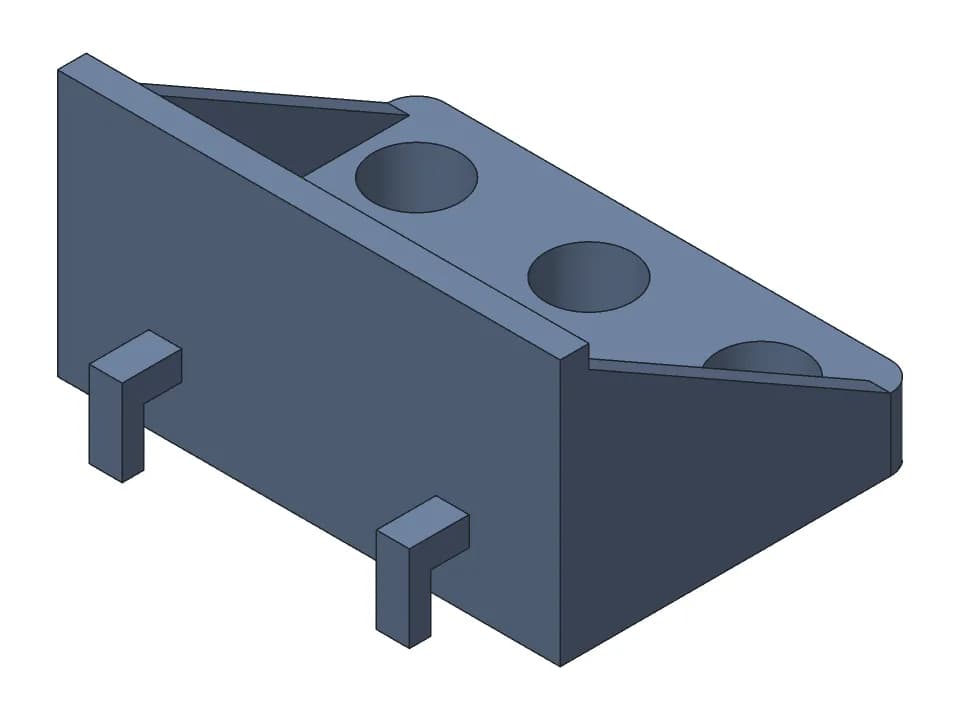
Before drawing anything, the agent listed what had to be true and how to measure each item on the model: the tab narrower than the 5 mm slot (4.6 mm, so 0.2 mm per side), the hook depth equal to its slider, a 5.3 mm gap for the 5 mm board, and the tab plus latch shorter than the 15 mm slot.
- 2
First build: one measurement did not work
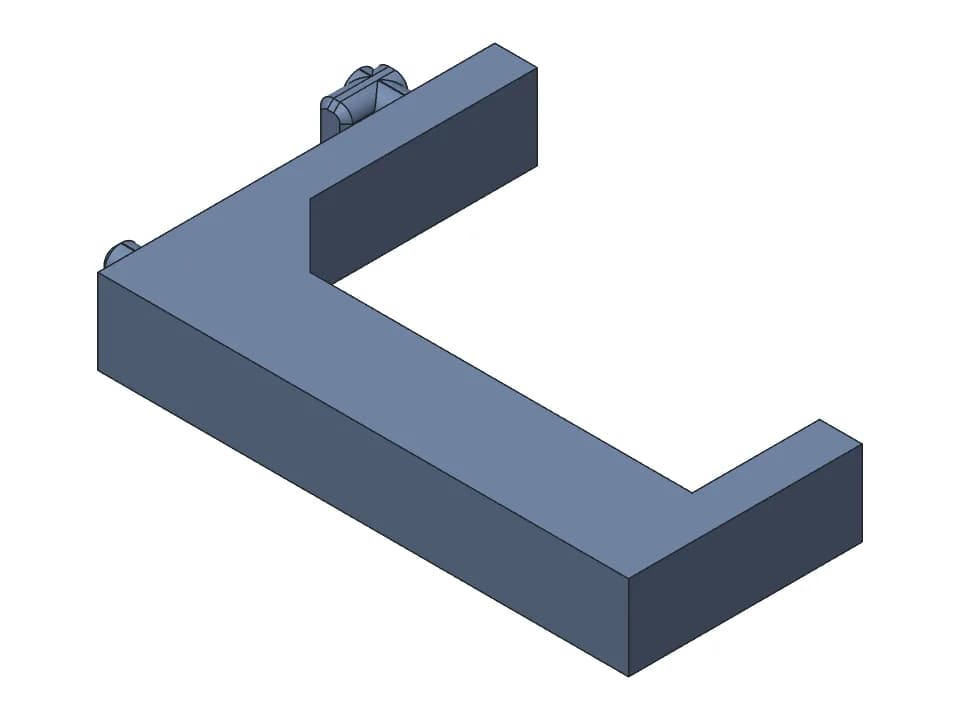
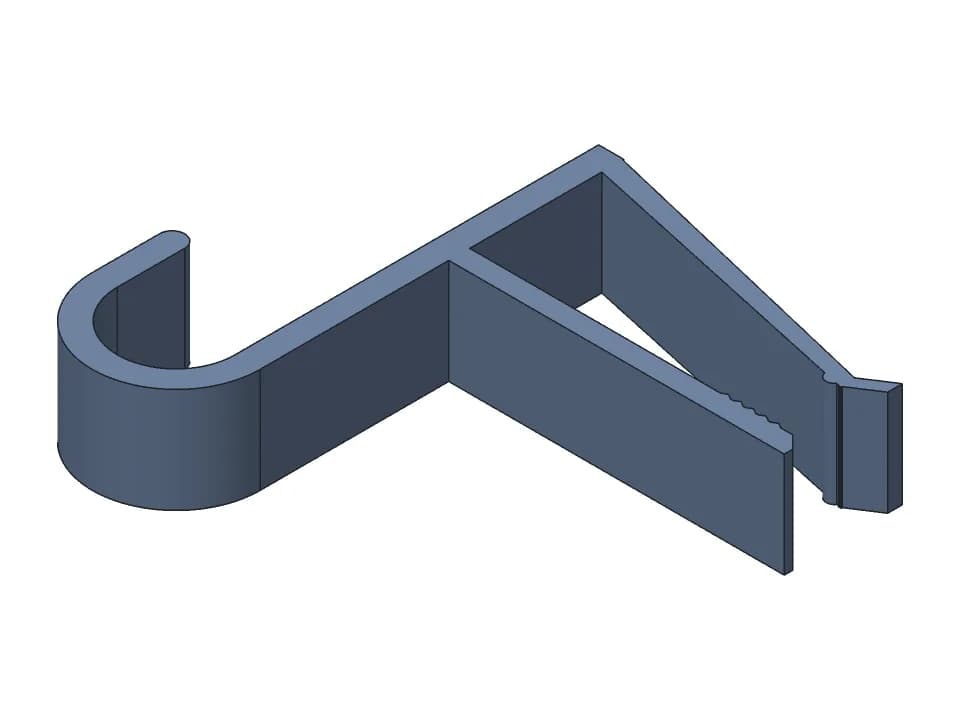
The first model (front plate, tab through the slot, latch behind the board, J-shaped cup) built as one valid body with nothing overhanging. Three checks passed at once, but the board-gap measurement returned nothing: its test box missed the part.
- 3
It probed the part instead
The agent shot rays through the hook to find where the plate, the gap and the latch really were, then rewrote the board-gap check as a probe. It measured 5.3 mm, as planned.
- 4
A virtual board and every slider extreme
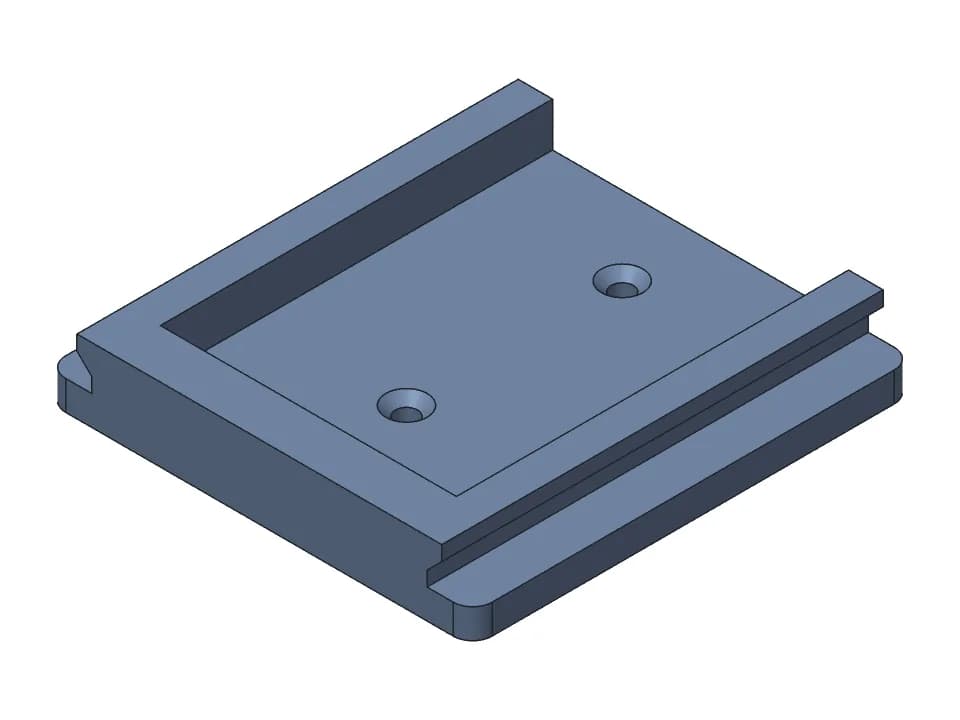
It modelled a slotted 5 mm board and moved the hook into it: pushed in 8.7 mm or more above its seat, the path is clear; at 8 mm the latch hits the board; seated, nothing overlaps. That is where the 9 mm in the print notes comes from. The slider sweep then rebuilt all 12 extremes as one valid body each.
- 5
What it left for a real test
Its reply says what it could not check: a real board and the load. Both are in the print notes above.
One run of the agent: 4 min 31 s, about $0.52 of model time at list price (claude-sonnet-5-5). The model code behind this page is the code it wrote, unchanged.